IT Nearshoring Strategy — not just a Resource Model
A clear IT nearshoring strategy makes international teams manageable and ensures reliable performance. Whether you are building or stabilizing your setup, we design the right operating model to make it work.

Talent makes IT nearshoring possible. Structure determines success.
When setting up IT nearshoring
IT nearshoring is often treated as a question of capacity. In reality, it is an architectural decision.
- Which model fits your organization?
- Which location makes strategic sense?
- What governance ensures clear accountability?
These decisions define the stability of your setup.
When your nearshoring setup isn’t stable
Your nearshoring works —
but it cannot be managed reliably.
- Responsibilities are distributed, but not clearly defined.
- Performance varies across teams and locations.
- Scaling increases complexity.
The operating model is running — but structurally unstable.
In both cases, capacity is not the problem. What matters is a
manageable IT nearshoring architecture.
The architecture behind manageable nearshoring performance
Manageable nearshoring does not happen by chance.
It is the result of a clear architecture.
This architecture connects three levels: governance, leadership, and organization.
Only when these levels work together does nearshoring become truly manageable.
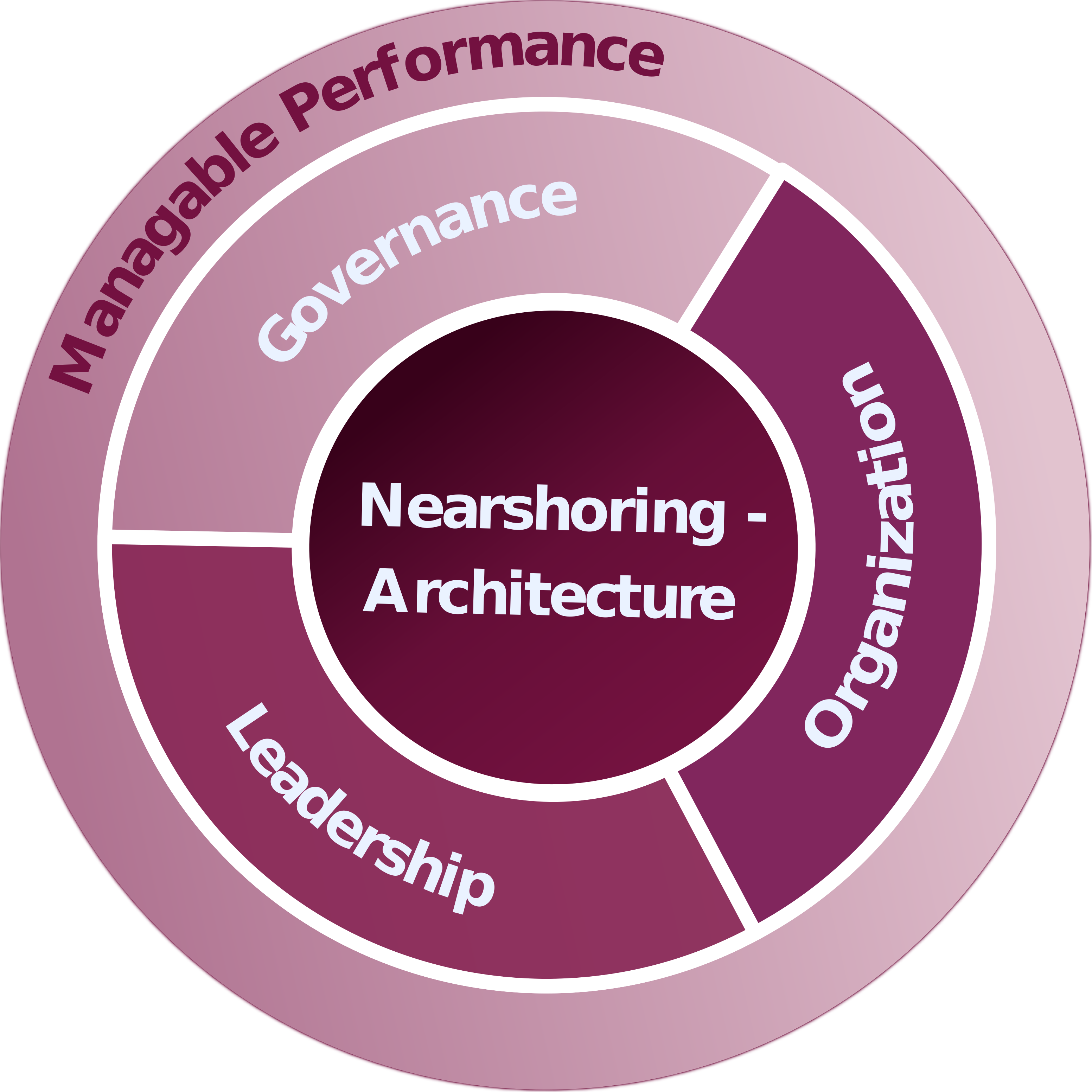
Effective Governance
- Clear decision logic
- Transparent KPI tracking
- Defined responsibilities
Decisive Leadership
- Aligned decision paths
- Clear accountability structure
- Robust collaboration
Robust Organization
- Integrated into delivery
- Scalable structures
- Evolving maturity
Only when these three levels work as one does nearshoring become truly manageable.
Two paths to a manageable nearshoring architecture
Companies start nearshoring from different situations. This leads to two distinct paths.
Building a structured nearshoring setup
For companies that want to set up nearshoring strategically and develop it in a structured way.
Stabilizing an existing nearshoring setup
For companies whose nearshoring is already in place but is not structurally stable or scalable.
Building a structured nearshoring setup
Understand the potential
Creates a clear basis for decision -making in IT nearshoring.
Details
Focus
- Clarify strategic goals and the role of nearshoring
- Understand the role of nearshoring for the organization and its leadership
- Assess the maturity of structure, governance, and delivery
Outcome
- Shared understanding of IT nearshoring
- Realistic model and location options
- Clear decision: move forward or pause
Develop the strategy
Turn options into a robust nearshoring model.
Details
Focus
- Define the target model and location strategy
- Design organizational structure, capacity and responsibilities
- Assess economics and risks
Outcome
- Model and location decision
- Structure and capacity plan
- Robust business case
Make it work
Turns strategy into a functioning delivery setup.
Details
Focus
- Implement the operating model
- Define roles, governance, and responsibilities
- Establish teams and ways of working
Outcome
- Working team structure
- Operational governance
- Clear ownership structure
Enable scalable growth
Makes nearshoring growth both manageable and repeatable.
Details
Focus
- Establish performance and KPI systems
- Develop leadership and role structures
- Strengthen standards, knowledge, and organizational structures
Outcome
- Manageable performance and clear governance
- Scalable organizational structure
- Delivery organization ready to scale
Stabilizing an existing nearshoring setup
Understand the situation
Turns structural issues in nearshoring into a clear diagnosis.
Details
Focus
- Analyze performance, delivery, and collaboration
- Review roles, governance, and responsibilities
- Assess the model, partners, and location structure
Outcome
- Clear diagnosis of the structural root causes
- Transparency on risks, friction, and dependencies
- Clear decision: stabilise, realign or redesign
Realign the structure
Turns existing structures into a stable and functioning setup.
Details
Focus
- Realign governance, roles, and decision paths
- Stabilise organisational and delivery structures
- Correct the partner, model, and location setup
Outcome
- Clear ownership and governance structure
- Stable and functioning delivery organization
- Corrected setup with reliable collaboration
Enable scalable growth
Makes growth in nearshoring both manageable and repeatable.
Details
Focus
- Establish performance and KPI systems
- Develop leadership and role structures
- Strengthen standards, knowledge, and organizational structures
Outcome
- Manageable performance and clear governance
- Scalable organizational structure
- Delivery organization ready to scale
Two typical situations in practice
How we approached it →
In close sparring, we first clarified goals, scaling plans, and operational requirements. Based on this, we compared captive, BOT (build-operate-transfer), and partner models and established a clear decision logic. This was followed by a structured country analysis.
The result was a well-founded decision on model and location — and the start of a manageable nearshoring setup.
How we approached it →
In sparring with the CEO and leadership team, we analyzed the setup as a system. It quickly became clear: the issue was not capability, but the lack of integration into governance and the operating model. We realigned responsibilities and developed clear decision options for the board.
The result was an integrated, manageable nearshoring setup — with clear governance, stable performance, and significantly reduced follow-on costs.

We
combine entrepreneurial experience, structure, and operational proximity.

Dr. Sabrina Frankenberg
Strategic Advisor
dc minerva

Davide Criscione
CEO
DC Services GmbH
The right structure determines your nearshoring success
Let’s clarify where you stand today — and which structure will hold over time.